Background: Avian influenza viruses pose a significant threat to animal and human health, food security and the economy. India has reported animal outbreaks and human cases of avian influenza in increasing frequency since 2006. Open-source intelligence (OSINT) on outbreak data can provide valuable early warning signals.
Aim: To analyse the temporal trend of various avian influenza strains in animal and human hosts in India using open-source intelligence data from EPIWATCH®, an Artificial Intelligence (AI)-driven early warning system for epidemics, and to assess the timeliness of its reports.
Methods: Animal and human outbreak data of avian influenza strains in India were extracted from EPIWATCH® from 1st January 2016 to 31st July 2024. A time series analysis of EPIWATCH® reports was conducted to investigate the temporal trend of avian influenza in India. To investigate the usefulness of EPIWATCH®, reports from EPIWATCH® were also compared with the animal outbreak data from EMPRES-i+. Geospatial analysis was performed to visualise the temporal trend of hotspots of infection.
Results: EPIWATCH® reports on avian influenza outbreaks in animals were found to be highly concentrated in winter months from December to early April, closely aligned with the trend of animal outbreak data from EMPRES-i+. Kerala and Maharashtra, identified as hotspots of avian influenza in EPIWATCH® between 2021 and 2024, were consistent with previously reported high-incidence regions. Statistical analysis of report dates of EMPRES-i+ showed a median delay of 73.5 days [IQR: 22.3 – 221.8]. These highlight the OSINT’s ability to capture far earlier signals of avian influenza outbreaks compared to formal reporting.
Conclusion: EPIWATCH® reports on avian influenza in both animals and humans closely match official data sources while offering early warning signals of outbreaks. As such, use of OSINT as an adjunct surveillance system could inform timely outbreak responses, reducing public health risks and socio-economic impacts.
Keywords: Avian Influenza, Epidemiology, EPIWATCH®, India, Descriptive Analysis
Avian influenza is recognised as a pathogen with pandemic potential affecting human and animal health (1,2). The increasing incidence of avian influenza outbreaks in poultry and other animals challenges the epidemiological surveillance and control efforts (3). According to the World Organization for Animal Health (WOAH), avian influenza outbreaks occurring between 2005 and 2023 resulted in the culling of 633 million poultry globally (4). Recently, the panzootic spread of highly pathogenic A/H5N1, including the evidence of mammal-to-mammal transmission (5), the high genetic reassortment capacity of A/H9N2 (6) has intensified the concerns about the potential emergence of novel avian influenza virus with pandemic threat. Although national surveillance systems for avian influenza exist worldwide, a lack of coordination and integration among different sectors has hindered the efficiency and timeliness of surveillance (7).
Since the first documented outbreak of avian influenza in northern Italy in 1878 (8), avian influenza outbreaks among different species of animals have been reported worldwide (5). The first documented human cases of avian influenza were reported in Hong Kong in 1997 when the H5N1 avian influenza virus originating from Guangdong Province, China, transmitted to humans through poultry market (9). Since then, spillover events of avian influenza from birds to humans occurred sporadically and 2,000 human infections associated with 10 avian influenza subtypes were recorded in 194 WHO member states during the period of 2013 to 2022 (3).
India is the most populous country in the world (10), and has faced outbreaks of avian influenza since its first documented outbreak in 2006 (9). Between 2006 and 2021, over 300 outbreaks of avian influenza were recorded in India among poultry and wild birds (9). These outbreaks had significant impacts on India’s economy (11) as they led to large-scale culling of poultry and trade restrictions to control the outbreaks. Moreover, India shares a border with China, which hosts multiple lineages of avian influenza in the wild birds and poultry (12). India lies within the Central Asian Flyway, a migratory route of six hundred species of birds connecting 30 countries including India (13). The African Eurasian flyway, the largest migratory route in the world overlaps with western India (13). This overlap further facilitates the intermingling of bird species from over one hundred countries (13). Annually, millions of birds find refuge in the warm wetlands and forests of India (14) making potential hotspots for genetic reassortments from combining different avian influenza strains and mutations. It has been reported that avian influenza A/H9N2 strain in India was found to contain genes reassorted from different strains and mammalian adaptation (15).
Although India has action plans to conduct both active and passive surveillance on avian influenza in wild birds and poultry (16), it has indicated a lack of comprehensive avian influenza surveillance data (17). Indian states of Maharashtra, Kerala, Odisha (formerly Orissa), and West Bengal are reported to be severely affected by the outbreaks of highly pathogenic avian influenza H5N1 and H5N8 (9).
Surveillance systems such as the World Animal Health Information System (WAHIS) of the WOAH or the EMPRES Global Animal Disease Information System (EMPRES-i+) of the Food and Agriculture Organization (FAO) rely mainly on data submitted by member states (18). Surveillance gaps and delays in reporting of avian influenza cases remain concerns with approximately one-fourth of the reports having a time-lag of more than one month (3). Thus, open-source intelligence can help with early signals of avian influenza outbreaks. Timely reporting of spatial and temporal trends of different avian influenza outbreaks may inform the public health authorities and support earlier outbreak containment interventions.
This study aims to analyse the temporal trend of various avian influenza strains in animal and human hosts in India using open-source intelligence data from EPIWATCH®. Additionally, the study evaluates the timeliness of EPIWATCH® in detecting avian influenza outbreaks in India in comparison to traditional surveillance.
Avian influenza outbreak data in India from EPIWATCH® were extracted and compiled into a line list. Temporal trends of avian influenza outbreaks were analysed for seasonality. For comparative analysis of timeliness, the time of reporting in EPIWATCH® was compared with the outbreak data extracted from a traditional surveillance system.
The data source was EPIWATCH®, an open-source outbreak detection system established in 2016 in the University of New South Wales (19). It utilises artificial intelligence systems such as natural language processing (NLP) to detect the articles of outbreak signals in 53 languages (20). It also uses prioritisation algorithm and large language models to obtain valid, automated and early outbreak reports (21).
A line list of reports of avian influenza virus outbreaks in animals and humans between January 2016 and July 2024 in India was extracted from EPIWATCH® by applying keywords shown in Appendix A. The variables collected were date of publication, event date, location (latitudes and longitudes), diseases (strains) and clinical syndrome.
To investigate the timeliness and utility of EPIWATCH® reports as early signals, a comparative analysis was also conducted between EPIWATCH® reports and data from EMPRES-i+ database. EMPRES Global Animal Disease Information System (EMPRES-i+) is maintained by the Food and Agriculture Organization (FAO) and records animal disease outbreaks reported from countries all over the world (22). The dashboard includes outbreak data not only from the World Animal Health Information System (WAHIS) of the World Organisation for Animal Health (WOAH), but also from FAO sources such as field officer and reports.
The dataset of animal outbreaks in India from the EMPRES-i+ system was downloaded from the dashboard (21) by applying the filters: Disease filter set to ‘Influenza - Avian’, Serotype to ‘All’, Region to ‘Asia’, Subregion to ‘Southern Asia’ and Country to ‘India’.
Each report from the line list of EPIWATCH® reports was checked to categorise whether it was an animal or human outbreak, and to confirm the information about locations and disease. Reports were included if they described avian influenza outbreaks in animal or human cases and occurred within India between January 2016 and July 2024. Reports were excluded if they were unrelated to avian influenza, were outside India or were not directly linked to outbreak events (e.g., vaccination campaigns, policy discussions).
All reported strains of avian influenza in India were included. Unspecified serotypes means that the reports did not specify the serotype. The animal outbreak data from EMPRES-i+ was also compiled into monthly frequency of outbreaks to compare with the monthly frequency of EPIWATCH® reports.
Descriptive analyses were performed to visualise the distribution of EPIWATCH® by disease strains, time and location. Epidemic curves, tables and heatmaps were created to show the trends and patterns. The EPIWATCH® reports were clustered according to the month of publication or event date to conduct the temporal analysis for seasonality of outbreaks. R Studio Version 2024.12.1+563 (23) was used to get the frequency of reports and to create tables and graphs, and to calculate the median time difference and interquartile range (IQR). Date of publication was used as a proxy for event date when the event date was not available.
To determine notable outbreak events, a threshold of three or more outbreaks in EMPRES-i+ within a month was applied. In addition, the three known human infections with avian influenza in India and an imported human infection to Australia were also considered as notable events. To contextualise seasonal variation, the temporal graph was overlaid with the range of seasons categorised by India Meteorological Department (IMD) (24).
A comparative analysis was conducted by comparing the reporting delay between EPIWATCH® and EMPRES-i+. The date of first outbreaks from EMPRES-i+ was treated as the outbreak start date for each state of India as a reference. To match outbreaks between EMPRES-i+ and EPIWATCH®, reports were aligned based on the outbreak start dates mentioned in the EPIWATCH reports. The interval in days between the outbreak start date and the reporting date of EPIWATCH® and EMPRES-i+ was considered as the reporting delay for each outbreak.
Geographic Information System (GIS) techniques were used to identify and visualise the spatial patterns of EPIWATCH® reports of animal avian influenza outbreaks in India. Python version 3.12.7 was used to aggregate the EPIWATCH® data points of avian influenza outbreaks in India from 2016 to July 2024 by year and location. Using ArcGIS Pro version 3.3, heat maps were created for each year to see the trend of hotspots over time.
A total of 626 reports between 1st January 2016 to 31st July 2024 from EPIWATCH® were included in our study. The largest proportion of reports are about avian influenza with unspecified serotype represented majority (64%, N=401/626). This is followed by A/H5N1 with 22% (N=135/626), A/H9N2 with 9% (N = 59/626) and A/H5N8 with 5% (N=31/626) of all reports (Table 1). The year 2024 represents the largest proportion of EPIWATCH® reports, accounting for 41% (N=258/626) in the study. In contrast, from 2016 to 2020, there were fewer number of reports, available from EPIWATCH® (Table 1).
Table 1: Summary of EPIWATCH® reports for avian influenza outbreaks of humans and animals in India (January 2016 - July 2024).
| Year | Unspecified | H5N8 | H5N1 | H9N2 | Total |
| 2016 | 2 | 2 | 1 | - | 5 |
| 2017 | 1 | 1 | - | - | 2 |
| 2018 | 1 | - | - | - | 1 |
| 2019 | - | - | 1 | - | 1 |
| 2020 | 3 | - | - | - | 3 |
| 2021 | 144 | 28 | 36 | - | 208 |
| 2022 | 96 | - | 32 | - | 128 |
| 2023 | - | - | 19 | 1 | 20 |
| Jan-July 2024 | 154 | - | 46 | 58 | 258 |
| Total | 401 | 31 | 135 | 59 | 626 |
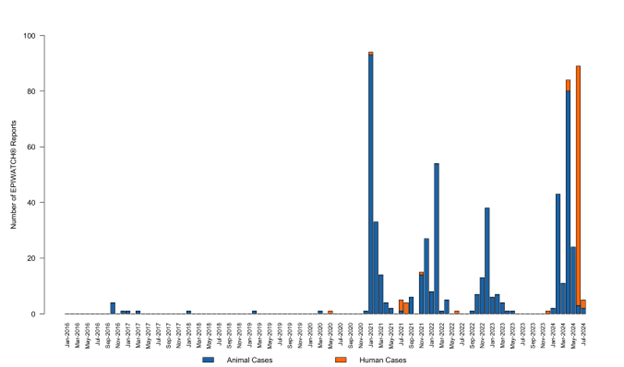
Figure 1 shows the monthly frequency of EPIWATCH® reports for avian influenza outbreaks in animals and humans in India from January 2016 to July 2024. Notably, very few EPIWATCH® reports of both animal and human infections were available before 2021. The EPIWATCH® reports between 2021 and 2024 July are found to be dominated by the animal outbreaks of avian influenza while the reports about a human infection of A/H9N2 spiked in June 2024.
Figure 1: Temporal Trends of EPIWATCH® Reports for Animal and Human Outbreaks of Avian Influenza in India (2016–2024)
Figure 2 illustrates monthly frequency of EPIWATCH® reports on different avian influenza strains of animal and human outbreaks in India, plotted only for the period between January 2020 and July 2024 when the reporting frequency was the highest to enable clear visualisation of seasonal patterns. The notable animal outbreak events occurring in the months are indicated with arrows to see the seasonality patterns of real outbreak data and EPIWATCH reports.
The monthly frequency of reports about ‘Unspecified’ strains of avian influenza are found to peak every year between December and early April which were categorised as winter months of India (24). This seasonal trend was also observed in A/H5N8 and A/H5N1 with a few reports of A/H5N8 in the monsoon months of 2021. However, the monthly frequency of EPIWATCH reports about A/H9N2 strains have one time peak in June 2024 deviating from this winter seasonal trend.
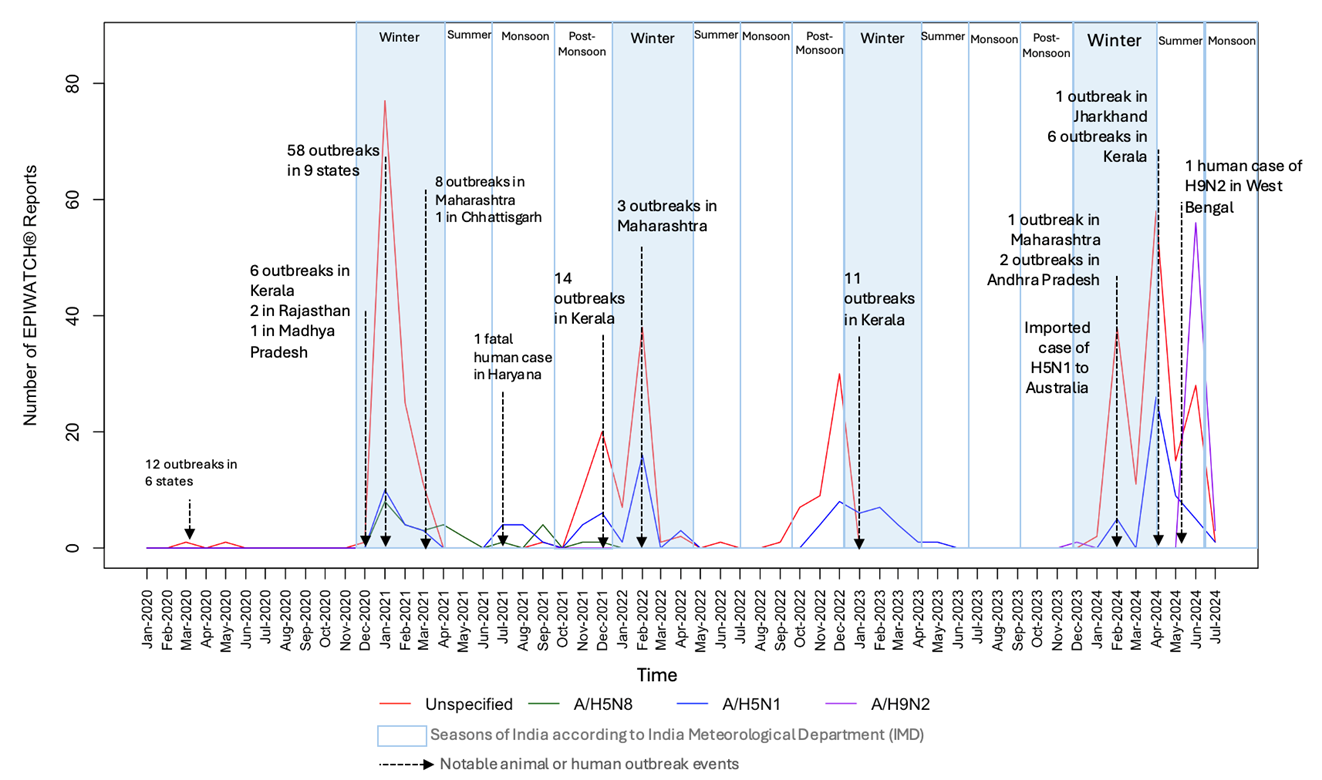
Figure 2: Temporal Trends of EPIWATCH® Reports of Avian Influenza virus outbreaks in animals and humans in India (January 2020 - July 2024).
Figure 3 compared the delay in detection (in days) of avian influenza outbreaks between EPIWATCH® and EMPRES-i+. The time delayed in reporting for EMPRES-i+ is found to be greater than EPIWATCH® in most outbreaks. The median days of delay in EMPRES-i+ is found to be 23.5 days [IQR: 16.5 – 46.3]. In contrast, the number of days delayed reporting in EPIWATCH® is lower with a median of 7.5 days [IQR: 3.5 – 15].

Figure 3: Delayed detection in days of animal outbreaks of avian influenza reported in EPIWATCH® compared to EMPRES-i+ (2016 - July 2024). Each pair of bars represent the length of delays (days) reported in EPIWATCH® and EMPRES-i+.
Figure 4 depicts the changing distribution of avian influenza outbreaks in animals and humans in India over the years between January 2021 and July 2024 from EPIWATCH®. As the number of EPIWATCH® reports was low between 2016 and 2020 (only 1-5 reports per year), these years are excluded in the analysis. Andhra Pradesh, Delhi, Jharkhand and Maharashtra are found to be hotspots with high density of EPIWATCH® reports in the period of January 2021 to July 2024. Kerala was continuously found to be a hotspot of EPIWATCH® reports from January 2021 to July 2024 whereas Maharashtra showed a high density of signals only in 2021 and 2022. Delhi has had a high density of EPIWATCH® reports for 2021 and 2023, while Jharkhand hosted for only one year, 2023. Andhra Pradesh only triggered a few or no reports from 2016 to 2023 and emerged as the state with high density of reports in 2024.
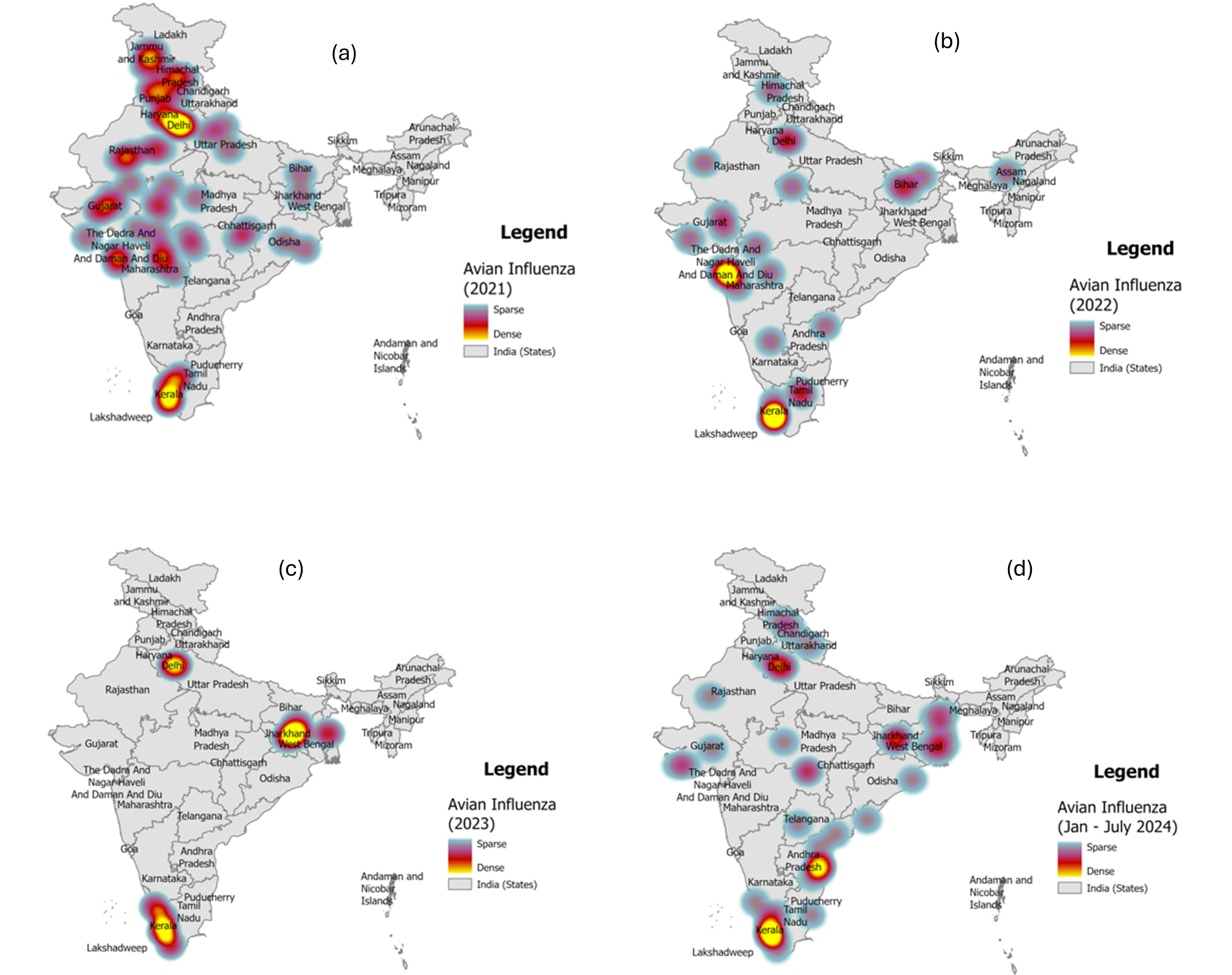
Figure 4: Heat maps illustrating the distribution of EPIWATCH® reports on avian influenza in animals and humans in India over the years (2021 – July 2024)
Open-source outbreak detection systems like EPIWATCH® play a vital role in providing early signals of outbreaks prior to official sources. This study examines the seasonal patterns of different avian influenza strains with the open-source intelligence data from EPIWATCH® and identifies key hotspots of avian influenza in India. Additionally, this study assesses the timeliness and utility of EPIWATCH® reports of avian influenza by comparison with animal outbreak data from EMPRES-i+.
The EPIWATCH® reports indicate that outbreaks of various avian influenza strains in both animal and human populations consistently peak during the winter months (December to early April). In contrast, reports of A/H9N2 do not demonstrate this same seasonal pattern. Influenza A/H9N2 has been continuously prevalent in India as a low pathogenic form in poultry for two decades, with many poultry workers sero-positive for A/H9N2 (15). This enzootic presence might explain why the spillover in 2024 deviated from the seasonality of other strains. The winter seasonal trend observed in EPIWATCH® data overlaps with the migratory bird season of November to February when the wild birds from the Central Asian Flyway intermingle with domestic poultry populations in India (25). The winter seasonal trend of avian influenza in India is well-documented in previous studies (9). This overlapped trend of EPIWATCH® reports, migratory season and avian influenza outbreaks highlight the potential usage of EPIWATCH® data as an early warning tool in combination with other data sources.
Compared with EMPRES-i+, EPIWATCH demonstrated earlier detection of avian influenza outbreaks. The relatively low frequency of reports observed between 2016 and 2020 is likely attributable to EPIWATCH® system’s restriction to English-language sources during that period. Multiple Indian languages have been added after that time. India has been implementing both active and passive surveillance systems nationwide since 2005 (16). Furthermore, the availability of sequencing data from India between 2020 to 2024 was substantially lower than that reported by many other countries, and reduced compared with previous years (17). This is likely due to diversion of health care resources towards the COVID-19 response. Recently, the A/H5N1 cases detected in Kerala showed evidence of “inter-subtype reassortments” with low pathogenic A/H3N8 subtypes that had circulated in the region (26), highlighting the importance of strengthening and expanding the surveillance capacity to monitor the emergence and evolution of avian influenza subtypes.
Among the states with hotspots, Kerala and Maharashtra were also reported as having high numbers of avian influenza outbreaks in animals, consistent with the data from another study (9). However, Andhra Pradesh, which became a hotspot in 2024, only 2 outbreaks have been documented in the EMPRES-i+ database, while a larger number of outbreak reports captured in EPIWATCH®. The implementation of strict control measures and trade restrictions during these outbreaks (27), may have heightened significant media attention, which could have led to increased detection of outbreaks by EPIWATCH®.
Additionally, Andhra Pradesh, Kerala and Maharashtra are classified as states with high or rapidly expanding poultry inventories in India. These three states accounted for approximately 25% of India’s total poultry population in 2019 (28). This might lead to the spread of avian influenza to surrounding states through poultry trades. Moreover, implementation of control measures such as culling and trade restrictions will have high socio-economic impacts as poultry farming represents a growing economy in India (29). Backyard poultry farming is also gaining popularity in India, comprising 35% of total poultry populations (30), thereby increasing the risk of zoonotic spillover to humans. These findings demonstrate that the geospatial data of EPIWATCH® reports can be utilised to identify and monitor avian influenza hotspots.
OSINT can provide early warning signals of outbreaks to public health professionals and authorities, which can be used for planning and interventions to control outbreaks to minimise public health and socio-economic impacts. This study shows that EPIWATCH® can provide earlier signals of avian influenza outbreaks in India, compared with official surveillance data. Our findings suggest that OSINT tools such as EPIWATCH® could enhance early outbreak detection, particularly in settings with reporting delays. Nevertheless, the fluctuations of OSINT reports like EPIWATCH® may reflect changes in media attention, surveillance practices such as press release activity, delays in laboratory confirmation and reporting, rather than true declines in outbreak occurrence. Thus, the reduced volume of EPIWATCH® reports observed in 2023 should therefore be interpreted with caution, as it may not accurately reflect the true epidemiological trend or decline. This underscores the importance of interpreting OSINT reports together with other surveillance data to ensure a more accurate assessment of disease dynamics.
There are some limitations to this study. Firstly, some avian influenza outbreaks could not be confirmed or verified as these data were based on the available open-source data of news websites, social media and other open intelligence sources. As open-source data derived from news media usually focuses on outbreaks of highly pathogenic avian influenza affecting poultry, infections caused by low pathogenic avian influenza subtypes may be under-reported. Some reports lacked detailed information regarding geographic locations, viral strains and whether the affected hosts were animals or humans. In cases where the event dates were not available, the publication dates were used as proxy, which may affect the actual timing of the outbreaks. The coordinates (latitude and longitude) data are the centralised locations of the reports and exact locations of outbreaks cannot be verified. Moreover, individual outbreak data were not extracted for direct comparison with the animal outbreak data of EMPRES-i+, because some EPIWACTH® reports lack sufficient details to distinguish individual outbreaks. Future studies could benefit from conducting emerging hotspot analysis to gain more detailed insights into how EPIWATCH® reports evolved across different hotspots over time.
In conclusion, this study indicates that animal outbreak reports of avian influenza from EPIWATCH® are concentrated in winter months, aligning with the seasonal pattern observed in the EMPRES-i+ database. EPIWATCH® also provides earlier reports of outbreaks prior to the official reports provided in the EMPRES-i+ database. Moreover, hotspot analysis of EPIWATCH® reports offers valuable insights into the spatiotemporal trend of avian influenza outbreaks in India, and may inform planning and targeted intervention programs to effectively control outbreaks in India.
1.World Health Organization. Influenza (avian and other zoonotic) [Internet]. World Health Organization. 2026. Available from: https://www.who.int/news-room/fact-sheets/detail/influenza-(avian-and-other-zoonotic)
2.Wang W, Xing J, Jiang H, Lu F, Huang H, Zhang Y, et al. Human infections with avian influenza a(H5) viruses with potential pandemic risk: 1997-2025. National Science Review. 2025 Nov 10;nwaf471.
3. Szablewski CM, Iwamoto C, Olsen SJ, Greene CM, Duca LM, Davis CT, et al. Reported Global Avian Influenza Detections Among Humans and Animals During 2013-2022: Comprehensive Review and Analysis of Available Surveillance Data. JMIR Public Health Surveill. 2023 Aug 31;9:e46383.
4. World Organisation for Animal Health (WOAH). High Pathogenicity Avian Influenza (HPAI) – Situation Report 68 [Internet]. 2025. Available from: https://www.woah.org/app/uploads/2025/03/hpai-report-68.pdf
5. Plaza PI, Gamarra-Toledo V, Euguí JR, Lambertucci SA. Recent Changes in Patterns of Mammal Infection with Highly Pathogenic Avian Influenza A(H5N1) Virus Worldwide. Emerg Infect Dis [Internet]. 2024 Mar [cited 2024 Aug 21];30(3). Available from: https://wwwnc.cdc.gov/eid/article/30/3/23-1098_article
6. Chang N, Wang H, Aisaiti K, Guo J, Wu T, Zhang C, et al. Complex Reassortment Dynamics of H9N2 Avian Influenza Viruses in Xinjiang, China: Implications for Zoonotic Spillover. Influenza Other Respir Viruses. 2025;19(10):e70170.
7. Duan C, Li C, Ren R, Bai W, Zhou L. An overview of avian influenza surveillance strategies and modes. Science in One Health. 2023;2:100043.
8. Lupiani B, Reddy SM. The history of avian influenza. Comparative Immunology, Microbiology and Infectious Diseases. 2009 Jul;32(4):311–23.
9. Pawar SD, Kode SS, Keng SS, Tare DS, Pande SA. Spatio-temporal distribution and seasonality of highly pathogenic avian influenza H5N1 and H5N8 outbreaks in India, 2006-2021. Indian J Med Res. 2023 Aug;158(2):113–8.
10. World Bank Open Data [Internet]. [cited 2024 Sep 24]. Population, total. Available from: https://data.worldbank.org/indicator/SP.POP.TOTL?most_recent_value_desc=true
11. Govindaraj G, Sridevi R, Nandakumar SN, Vineet R, Rajeev P, Binu MK, et al. Economic impacts of avian influenza outbreaks in Kerala, India. Transbound Emerg Dis. 2018 Apr;65(2):e361–72.
12. Tian H, Zhou S, Dong L, Van Boeckel TP, Cui Y, Newman SH, et al. Avian influenza H5N1 viral and bird migration networks in Asia. Proc Natl Acad Sci USA. 2015 Jan 6;112(1):172–7.
13. BirdLife International. BirdLife International. 2025 [cited 2025 Mar 19]. Global flyways. Available from: https://www.birdlife.org/globalflyways/
14. Gopinathan L. GAVI, the Vaccine Alliance. [cited 2024 Oct 3]. Sitting ducks: how likely is a bird flu pandemic in India? Available from: https://www.gavi.org/vaccineswork/sitting-ducks-how-likely-bird-flu-pandemic-india
15. Tare DS, Pawar SD, Keng SS, Kode SS, Walimbe AM, Limaye VV, et al. The evolution, characterization and phylogeography of avian influenza H9N2 viruses from India. Virology. 2023 Feb;579:9–28.
16. Ministry of Fisheries, Animal Husbandry and Dairying, Department of Animal Husbandry and Dairying. Action Plan for Prevention, Control and Containment of Avian Influenza (Revised – 2021) [Internet]. 2021. Available from: https://dahd.gov.in/sites/default/files/2025-03/Revised_AI_Action_Plan_2021.pdf
17. Deng YM, Wille M, Dapat C, Xie R, Lay O, Peck H, et al. Influenza A(H5N1) Virus Clade 2.3.2.1a in Traveler Returning to Australia from India, 2024. Emerg Infect Dis [Internet]. 2025 Jan [cited 2025 Mar 19];31(1). Available from: https://wwwnc.cdc.gov/eid/article/31/1/24-1210_article
18. World Organisation for Animal Health (WOAH). World Animal Health Information System WAHIS [Internet]. WOAH - World Organisation for Animal Health. [cited 2025 Sep 16]. Available from: https://www.woah.org/en/what-we-do/animal-health-and-welfare/disease-data-collection/world-animal-health-information-system/
19. Raina MacIntyre C, Lim S, Gurdasani D, Miranda M, Metcalf D, Quigley A, et al. Early detection of emerging infectious diseases - implications for vaccine development. Vaccine. 2024 Mar;42(7):1826–30.
20. UNSW Sydney [Internet]. [cited 2024 Oct 24]. EPIWATCH – rapid epidemic intelligence | UNSW Research. Available from: https://research.unsw.edu.au/projects/epiwatch-rapid-epidemic-intelligence
21. Food and Agriculture Organization of the United Stations [Internet]. [cited 2024 Oct 24]. Empres-Plus. Available from: https://empres-i.apps.fao.org/diseases
22. Food and Agriculture Organization of the United Stations [Internet]. [cited 2024 Oct 24]. Animal health. Available from: https://www.fao.org/animal-health/areas-of-work/early-warning-and-disease-intelligence/FAO's-EMPRES-Global-Animal-Disease-Information-System-(EMPRES-i-)/en
23. RStudio Team. RStudio: Integrated Development for R [Internet]. Boston, MA: RStudio, PBC; 2023. Available from: https://www.rstudio.com/
24. National Informatics Centre, Government of India [Internet]. [cited 2024 Nov 4]. Profile - Climate - Know India: National Portal of India. Available from: https://knowindia.india.gov.in/profile/climate.php
25. Jungle Safari Rajaji National Park [Internet]. 2024 [cited 2024 Oct 29]. Migratory Birds in India: A Seasonal Spectacle. Available from: https://blog.junglesafarirajajinationalpark.com/migratory-birds-in-india/
26. Pawar SD, Keng SS, Tare DS, Balakrishnan A, S S, Koshy J, et al. Evidence of novel reassortment in clade 2.3.4.4b avian influenza H5N1 viruses, India, 2024. Virology. 2025 May;606:110482.
27. Times of India [Internet]. 2024. Bird flu in Andhra Pradesh: Know the symptoms, preventive measures. Available from: https://timesofindia.indiatimes.com/life-style/health-fitness/health-news/bird-flu-outbreak-in-andhra-pradesh-symptoms-preventive-measures/articleshow/107796220.cms
28. Pathak A, Tripathi A, Singh V, Jahan T. Poultry farming in India: an overview. 2022; Available from: https://e-planet.co.in/images/Publication/vol-20-1/poultry_farming.pdf
29. IMARC [Internet]. [cited 2024 Nov 3]. India Poultry Market Share, Size, Outlook- 2024-32. Available from: https://www.imarcgroup.com/indian-poultry-market
30. Singh M, Mollier RT, Paton RN, Pongener N, Yadav R, Singh V, et al. Backyard poultry farming with improved germplasm: Sustainable food production and nutritional security in fragile ecosystem. Frontiers in Sustainable Food Systems [Internet]. 2022;6:962268. doi:10.3389/fsufs.2022.962268.